You are here: Home » Information & Advice » Landscaping & Design » Design Case Studies
Category: Design Case Studies
2011’s Husqvarna Global Garden Report identified the value that a well-maintained garden space brings to home’s property value, especially at time of sale. 69% of real estate agents believed that the garden was either important or very important for the overall market value of a property. 16 % increase on the value of a property [...]
Tropical delight on the shore The brief on this Mairangi Bay property in simple terms was “I want to be in Fiji without leaving my backyard”. With this in mind and an openess for creativity we went about our task with a passion. The interest and challenge was the movement and placement of 40 tonne [...]
By Philip Smith -O2 Landscapes ‘Form grammar’ is a term that may be used to refer to the organisation of, and relationship between, forms. The predominant type of ‘form grammar’ applied by designers in New Zealand is based on the formal geometric tradition laid down by the European forebears of our modern society (and further [...]
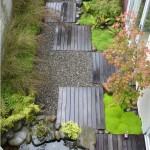
Wayne Butson of Design+Garden Landscapes tells us about a recent project. We had a challenging Dunedin site to work on over Autumn, this was a small patio space behind tall block boundary walls, some up to 4 metres high. Challenging in the fact we had to crane over all materials and machinery into the site, [...]
One innovative Hamilton restaurant has brought a living native forest right into their restaurant. The Foundation Bar and Kitchen has planted a stunning 15 metre-long wall of living pongas in the restaurant. The “living wall” is something special, and quite possibly a first for any restaurant. Following nature’s lead, the ponga fronds have created a [...]
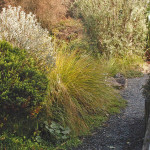
Subalpine scrub and dry grasslands serve as the basis for the planting at this Tekapo garden. By Philip Smith from o2 Landscapes.
Virtuoso Landscape Design creates a relaxing rooftop haven in Auckland.
One of the most interesting challenges associated with designing gardens for progressive buildings is bedding them back into the context of the neighbourhood in which they are situated, writes Philip Smith from O2 Landscapes.